A generational wealth transfer
The S&P 500 added roughly half a percent Friday to notch its 12th weekly gain in the past 15, the Dow tacked on about 150 points, and the Nasdaq — despite a modest 0.3% daily move — turned in the week’s real standout performance, up 1.7% as chip stocks found their footing again after an earlier rough patch. The Russell 2000 didn’t get the memo, slipping for a second straight week, its first back-to-back weekly decline since early-to-mid March. Volume was thin and the intensity of the broader rally has clearly cooled, a backdrop that’s about to collide with an earnings season Wall Street analysts have front-loaded with unusually aggressive upward revisions.
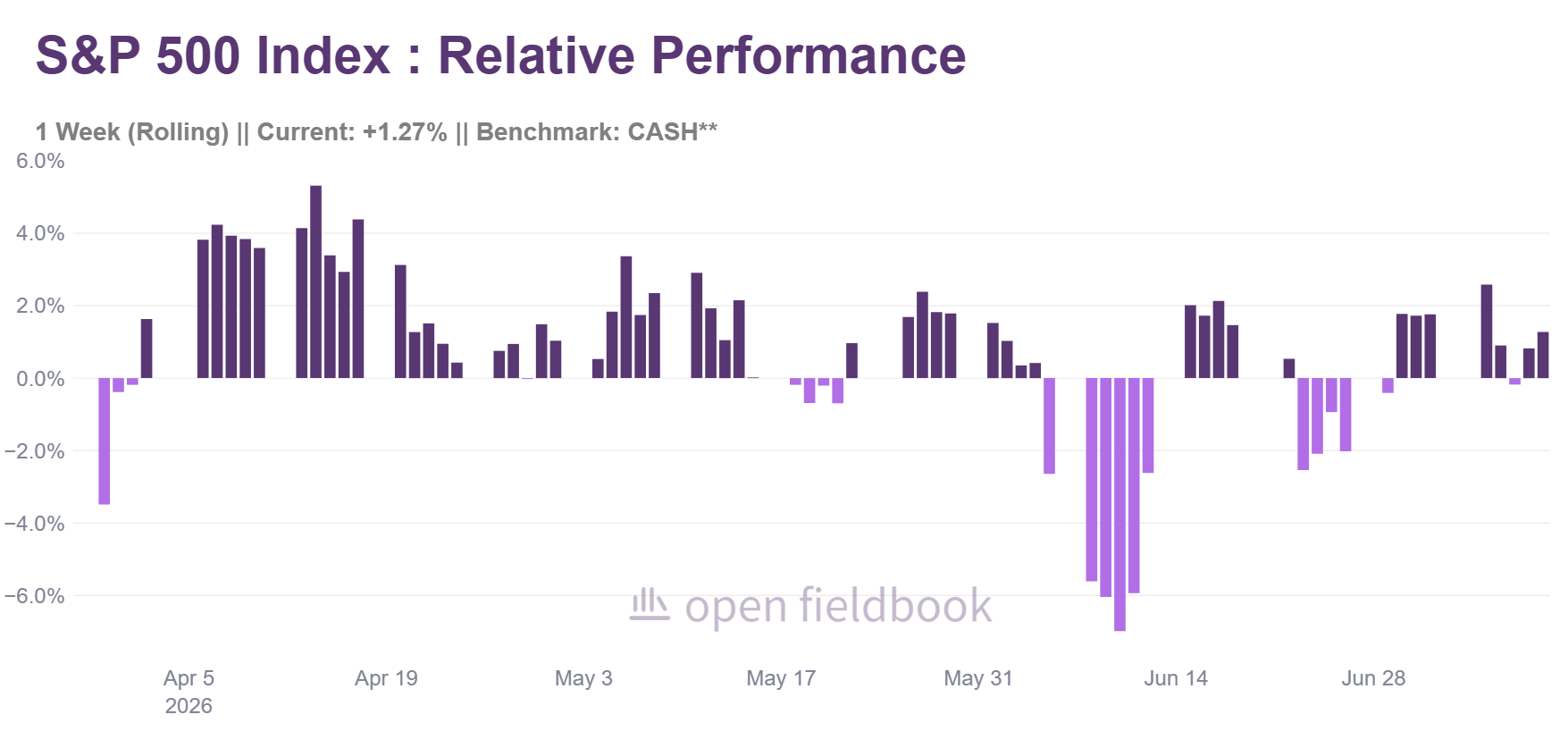
S&P 500 SPY -1.06%↓ ~0.4↑ || 7,575
Nasdaq QQQ -2.11%↓ ~0.3%↑ || 26,275
Dow Jones DIA -0.16%↓ ~0.3%↑ || 52,650
Table of Contents
A Generational Transfer (main story)
Company Highlights
Economy and the Big Picture
Other Notables
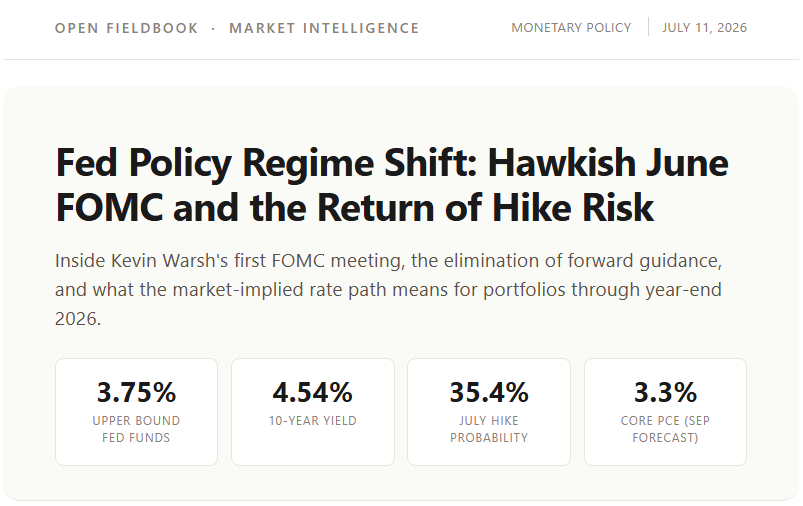
Hawkish June FOMC and the Return of Hike Risk (premium)
The Portfolio Goat app
New Link Roundup (new)
Premium Research Links
As a premium subscriber to OpenFieldbook newsletter, be sure to take advantage of your access to the complementary OpenFieldbook app, or upgrade your membership.
Main Story
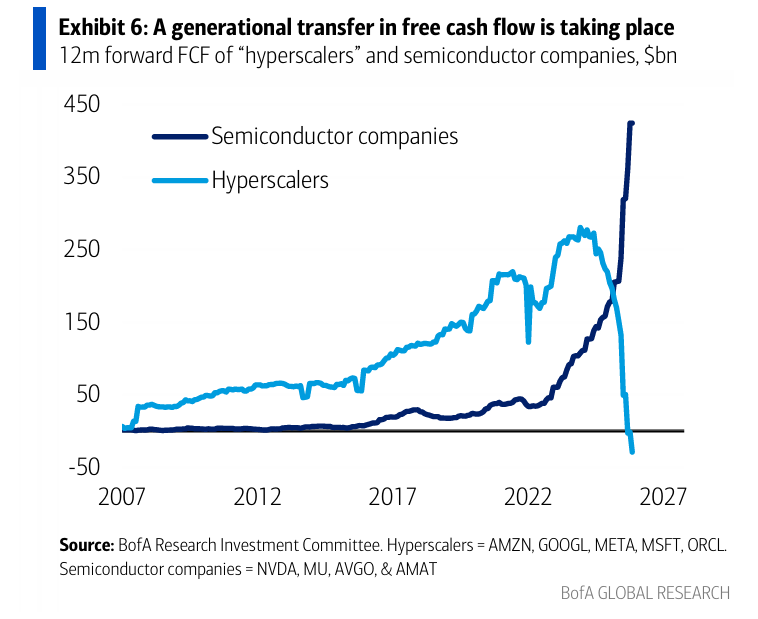
The week’s real story, though, was a widening gap between the companies building AI infrastructure and the hyperscalers paying for it. A Bank of America chart making the rounds on trading desks this week shows two decades of diverging fortunes: free cash flow at chipmakers like Nvidia NVDA 0.00%↑, Micron MU 0.00%↑, and Applied Materials AMAT 0.00%↑ has gone parabolic, while free cash flow at the hyperscalers footing the bill — Microsoft, Alphabet, Oracle among them — has been sliding.
BofA is calling it a generational transfer, and it’s not hard to see why: chipmakers are pocketing fat margins while their customers absorb the capex. One theory gaining traction is that growing adoption of Chinese AI models could erode what customers are willing to pay U.S. hyperscalers over time, pressuring cash flow and earnings not this quarter, but over the next several years — a dynamic lawmakers are reportedly starting to scrutinize.
That tension crystallized Friday in the U.S. debut of SK Hynix $SKHYV, whose $26.5 billion ADR offering was the largest-ever U.S. listing by a foreign company. Shares jumped roughly 13-14% out of the gate, trading at a premium to the Korean-listed stock given trading restrictions — but tellingly, the win didn’t spill over into the broader chip complex. The Philadelphia Semiconductor Index barely budged, up a couple tenths of a percent, as if the SK Hynix listing had simply siphoned off the appetite that might otherwise have gone into Nvidia or Micron.
Jackson Square Capital’s Andrew Graham likened the current setup to 1999, when communications-equipment names like Cisco and Nokia ran hot while communications-services stocks lagged — except he thinks the resolution this time comes from hyperscalers catching up rather than chipmakers falling, helped along by steadying token costs improving the return on AI capex.
Nvidia had its best week in about two months, back near $210 and its highest level since late May, up 3-4% on the day. Meta ran even hotter — up double digits for the week by some counts, closing near $669 after KeyBanc raised its price target, arguing Meta is the only hyperscaler with a credible shot at catching Anthropic and OpenAI across models, compute and talent simultaneously. SpaceX told a messier story: still trading right around its $135 IPO price, with figures ranging from down 4.5% on the day to down 10% on the week.
Company Highlights
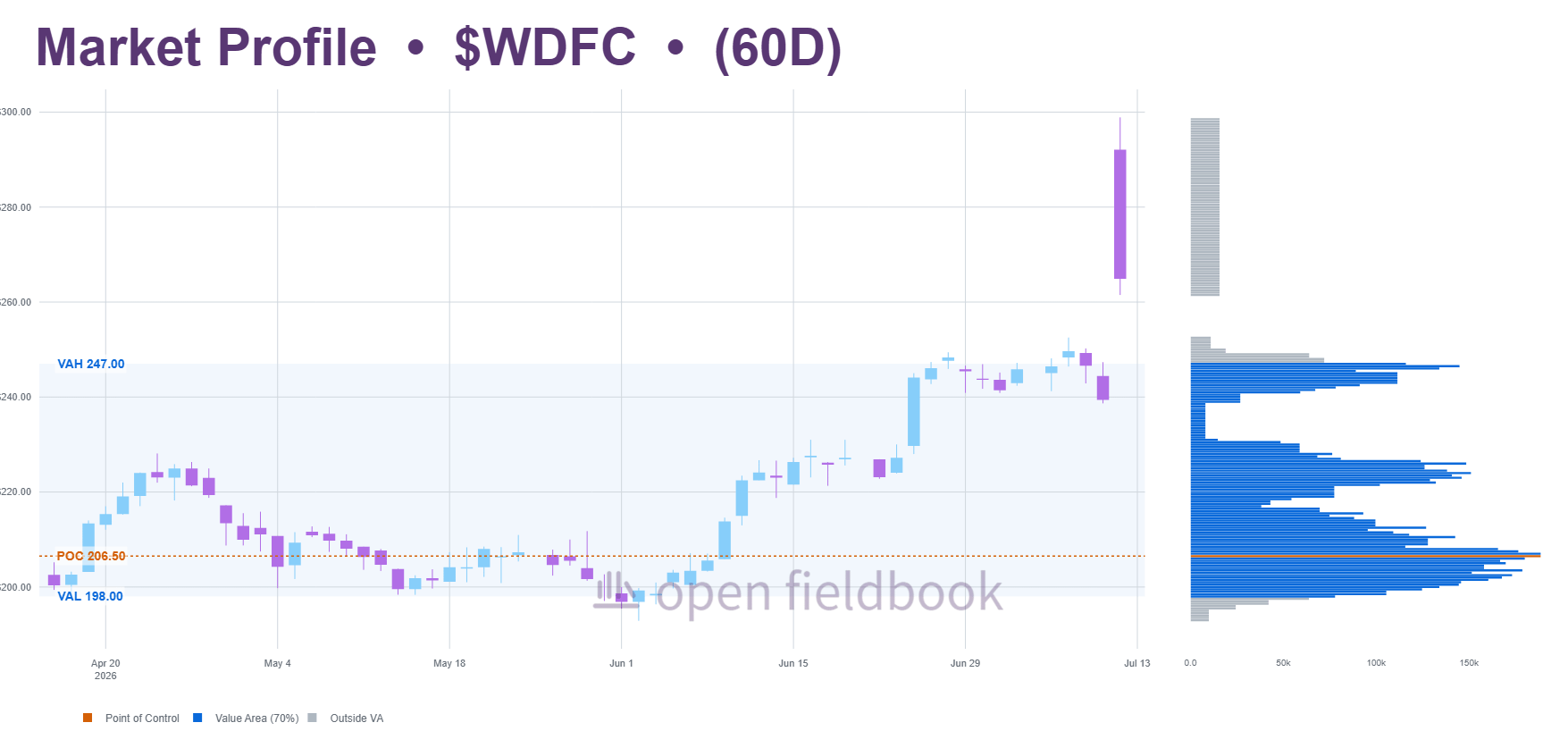
Elsewhere, WD-40 WDFC 0.00%↑ popped as much as 25% intraday on a raised sales forecast, even as Jefferies flagged margin pressure from rising costs;
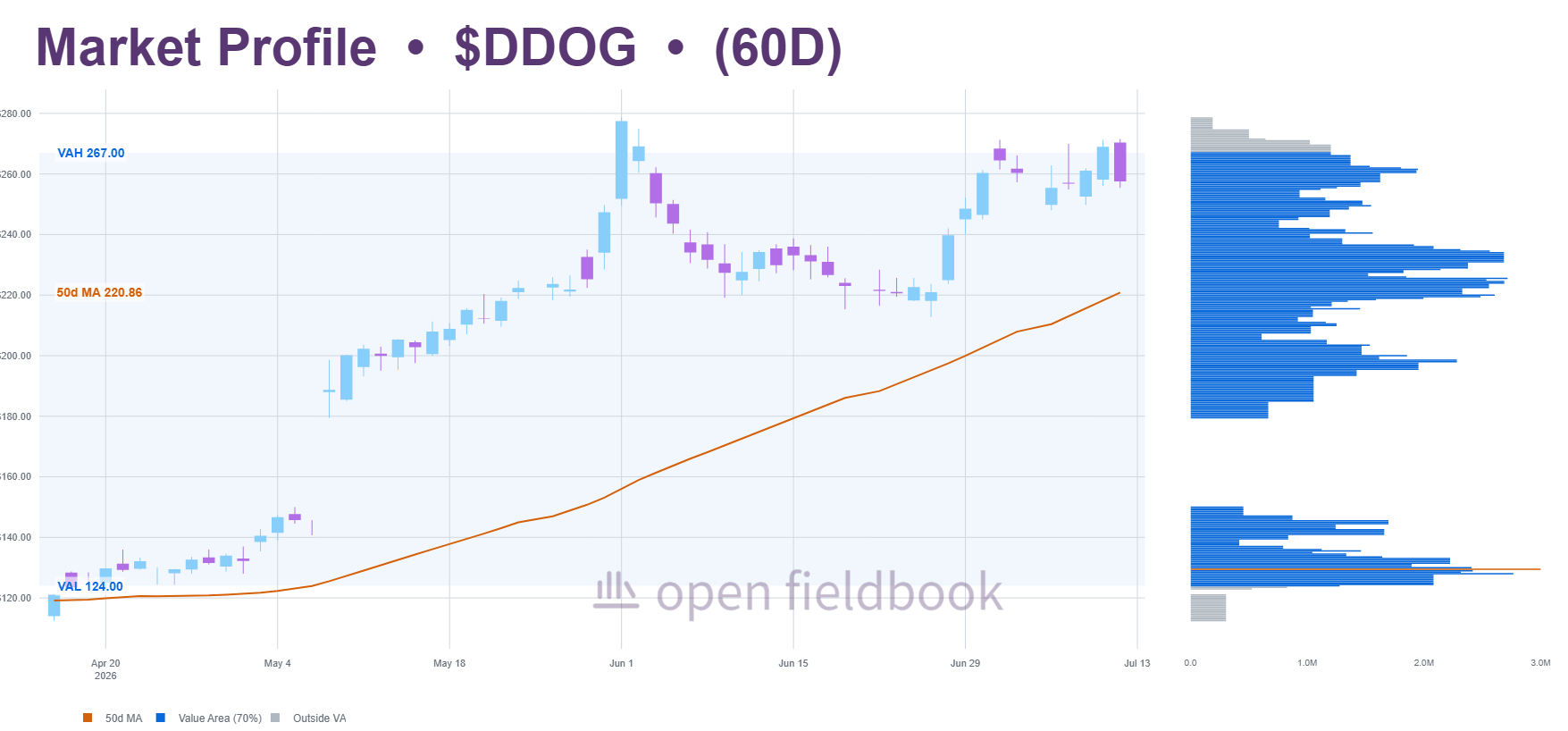
Datadog DDOG 0.00%↑ fell more than 4% after a Bernstein downgrade cited tough comps and flattening demand;
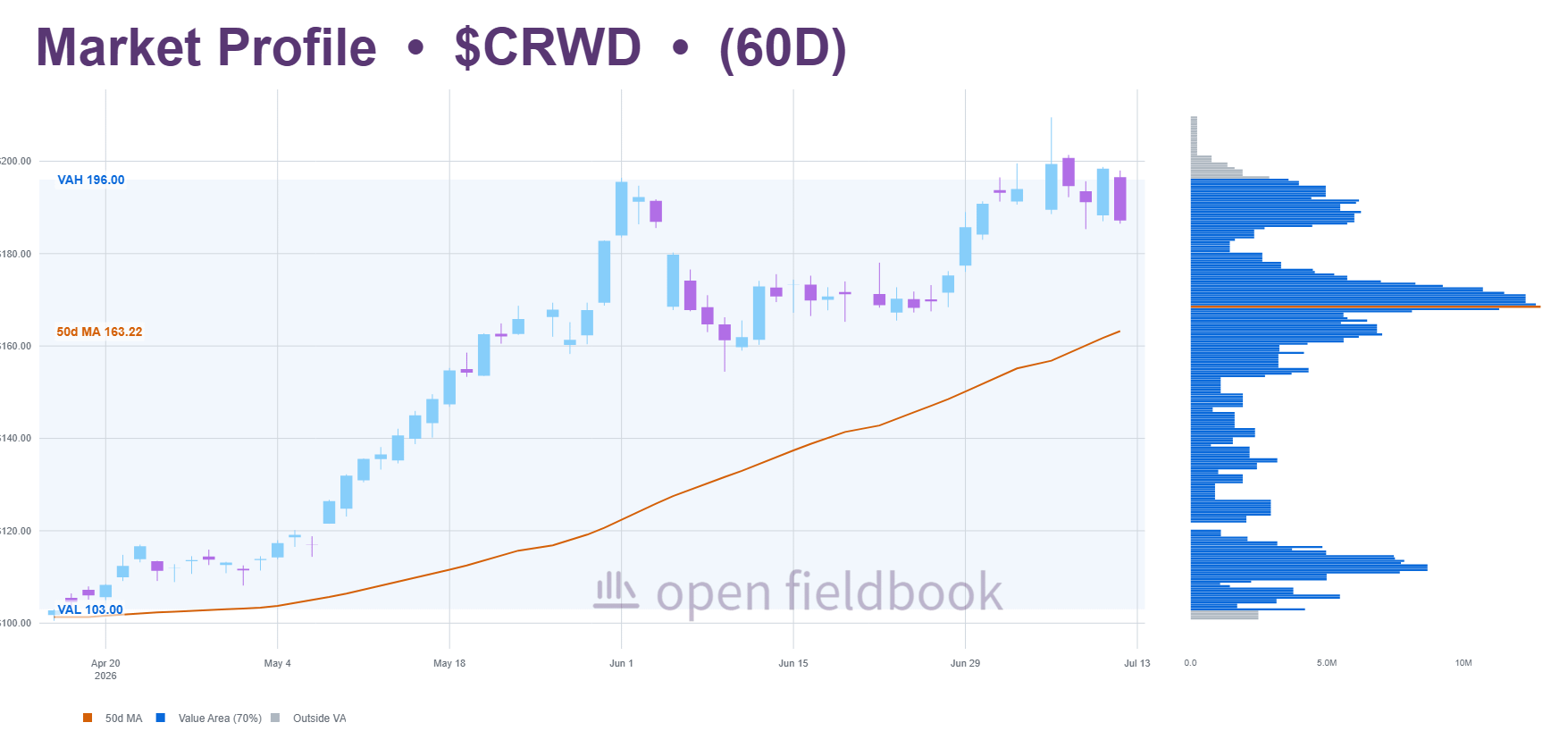
CrowdStrike CRWD 0.00%↑ dropped nearly 6% purely on insider selling by its president and COO that the market punished.
Away from tech, Delta DAL 0.00%↑ kicked off airline earnings with a beat and a reaffirmed full-year profit outlook, even as shares slipped on the day. Raymond James’s Savvi Scythe called out something counterintuitive: Main Cabin unit revenue growth actually outpaced Premium, a function of industry capacity — including roughly half of Spirit’s old routes — still not being fully backfilled, which she reads as a good sign for JetBlue and other domestic-focused carriers. Jet fuel costs, up as much as 150% from where they started the year and still running about 45% above January levels, haven’t dented Delta’s guidance, evidence of just how much pricing power airlines are carrying into the back half of the year. TD Cowen’s Tom Fitzgerald put the pecking order plainly: Delta and United out front, American trailing them, and Alaska, JetBlue and Southwest each scrambling upmarket in their own way.
Volkswagen, by contrast, is in genuine crisis: global deliveries fell 8.6% to 2.1 million vehicles, China deliveries collapsed 36.6% as local rivals took share, and global EV sales slipped 4.2% even as U.S. EV sales were cut in half — prompting CEO Oliver Blume’s so-called “future plan.” Global PC shipments fell about 5% in the quarter, the first decline after nine straight quarters of growth, still traceable to the same memory-chip shortage rattling the broader chip supply chain.
Economy and the Big Picture
Money continues pouring into the AI buildout at a pace that’s hard to fully parse: roughly seven months have produced close to $200 billion in AI-related equity listings (SpaceX’s $86 billion IPO, SK Hynix’s $26 billion debut, and other raises) alongside another $200 billion in hyperscaler bond issuance, according to figures cited on air Friday.
CreditSights’ Winnie Cisar flagged a subtler warning sign in that borrowing: Amazon’s bond deal earlier this week was oversubscribed by just 1.6 times, notably softer demand than the last time Amazon tapped the market four months ago — a possible early sign of fatigue with the sheer volume of tech-sector debt hitting the market, even as spreads overall remain tight.
Former SEC Chair Gary Gensler, now at MIT, put a historian’s frame on all of it. Every measure of valuation — price-to-earnings, Shiller CAPE, market cap to GDP — is stretched, he said, and that’s part of why companies are racing to raise capital while conditions are favorable. He drew a straight line to past general-purpose-technology cycles — canals, railroads, electricity, the internet — each of which saw enthusiastic financial backing followed by overinvestment, falling valuations, and, in the railroad boom’s case, a genuinely brutal aftermath. He was unequivocally more sanguine about foreign listings like SK Hynix strengthening U.S. capital markets than about proposals to wrap prediction-market contracts — he cited an actual Polymarket contract on whether the government confirms alien life by year-end, trading near 8% — into ETF products, which he dismissed flatly as entertainment rather than investing.
Other Notables
Bonds had their own quiet drama. The 30-year yield broke above 5% mid-week and has stayed there, though by Friday it had stopped pressuring stocks the way it had earlier in the week. DoubleLine’s Jeffrey Sherman flagged that core PPI is still running above 5% even as headline CPI is expected to dip into negative territory month-over-month when Tuesday’s report lands — one reason Fed rate-cut expectations have flipped from two cuts priced in at the start of the year to two cuts now expected at the back end instead. This week brings the bulk of Q2 bank earnings — JPMorgan, Bank of America, Goldman Sachs, Wells Fargo and Citigroup, most reporting Tuesday — with Gabelli’s Macrae Sykes expecting an exceptional quarter across the board given three months of market volatility, second-best-ever trading revenue, and record first-half IPO issuance led by SpaceX. He singled out Wells Fargo as comparatively cheap despite lagging peers by double digits year-to-date. Netflix and Taiwan Semiconductor both report Thursday, and Kevin Warsh testifies before Congress Tuesday and Wednesday.
TKO Group shares are down about 10% year-to-date heading into Saturday’s Conor McGregor fight, weighed down by Middle East revenue exposure and lingering questions over whether its UFC media deal already marked the ceiling. Paramount Skydance’s roughly $110 billion Warner Bros. Discovery takeover is still expected to close, per Morgan Stanley’s Shawn Diffy, who sees AI cutting 20-40% of production costs — pointing to Netflix’s disclosure that AI eliminated reshoots that would have consumed a fifth of “The Crown’s” budget.
Away from the tape: Apple’s design-theft lawsuit against former executives-turned-OpenAI-hardware-team members is playing out even as its Siri partnership with OpenAI continues unaffected. And Bank of America data shows wedding spending up 8.5% this year, more than double the pace of the prior two years — proof, as one BofA economist put it, that love remains stubbornly inflation-proof even as the average wedding now runs $36,000, about $3,000 more than in 2024.